Introduction
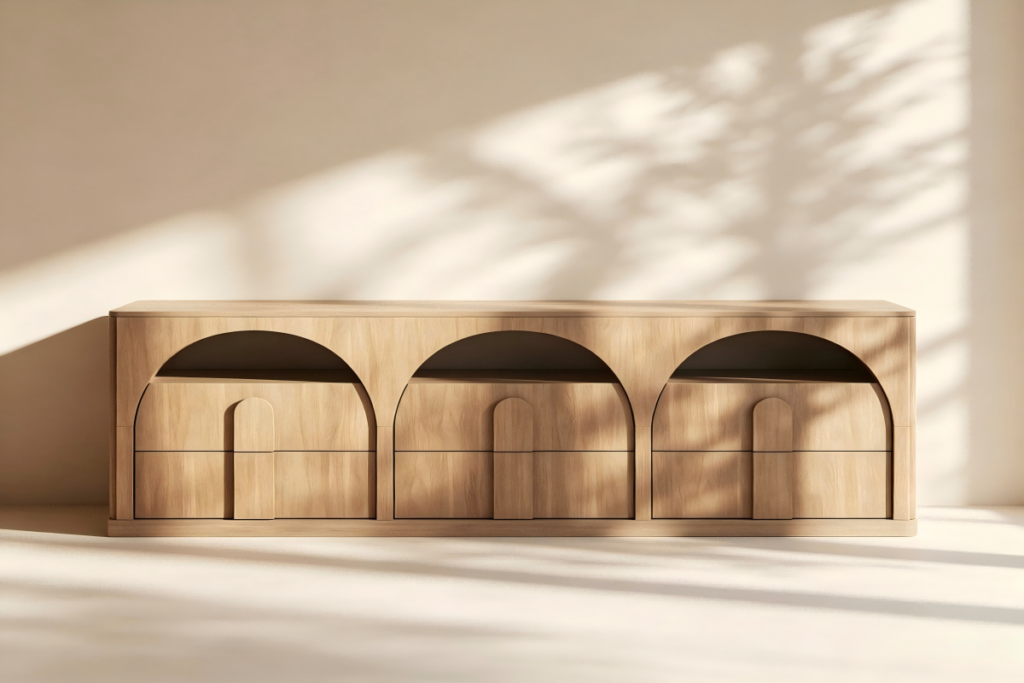
Choosing the right material is one of the most important decisions when developing or sourcing a TV stand collection. While design and functionality often attract buyers first, the material determines durability, production cost, appearance, and long-term customer satisfaction.
Different markets also have different expectations. A TV stand designed for North America may prioritize farmhouse aesthetics and storage capacity, while European buyers often prefer minimalist designs with clean finishes. Understanding these differences helps furniture brands, wholesalers, retailers, and importers make smarter purchasing decisions.
In this guide, we’ll explore the most common TV stand materials, their advantages and disadvantages, and how to select the best option for your target market
.
Why Material Selection Matters
The material of a TV stand influences much more than its appearance. It directly affects:
- Product durability
- Manufacturing cost
- Surface finish
- Weight
- Assembly performance
- Shipping efficiency
- Customer satisfaction
Selecting the right material ensures your furniture collection remains competitive while meeting the expectations of different consumer markets.
Melamine Board: The Most Popular Choice for Modern TV Stands
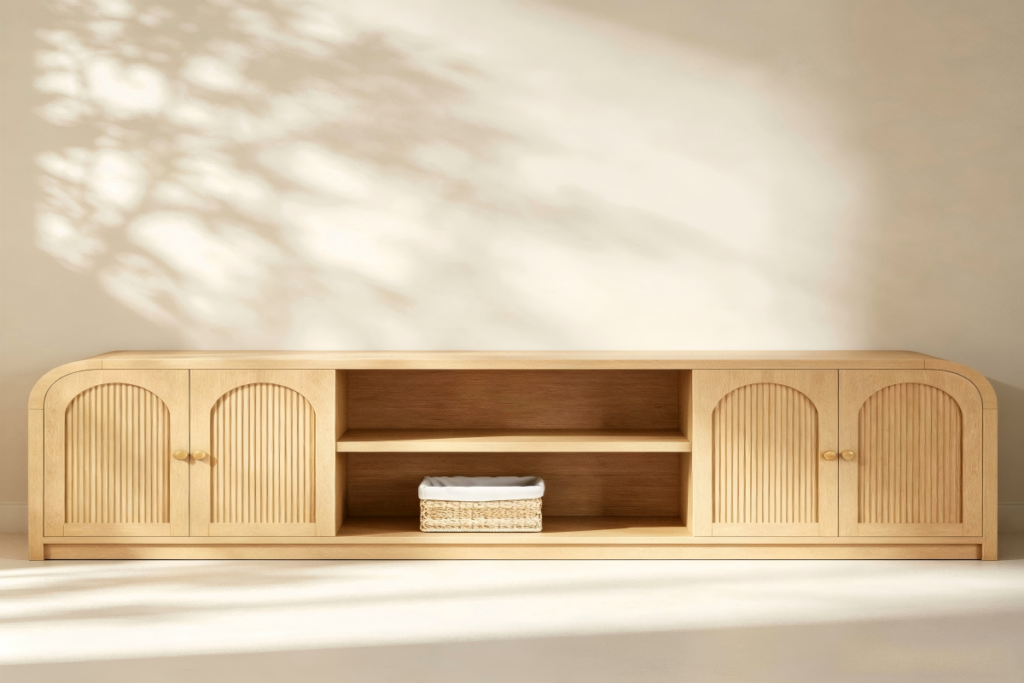
Melamine board has become one of the most widely used materials in modern furniture manufacturing. It offers an excellent balance between affordability, durability, and design flexibility.
Advantages
- Scratch-resistant surface
- Easy to clean
- Excellent color consistency
- Large selection of wood grain finishes
- Cost-effective for mass production
- Suitable for flat-pack furniture
Melamine is particularly popular in North America, Australia, and many European countries because it combines modern aesthetics with practical everyday use.
Today’s advanced decorative papers allow melamine furniture to realistically imitate oak, walnut, ash, marble, concrete, and many other premium finishes while maintaining competitive pricing.
MDF: Smooth Surface for Painted Furniture
Medium Density Fiberboard (MDF) remains one of the preferred materials for painted TV stands and contemporary furniture collections.
Because of its dense and smooth surface, MDF produces an excellent painted finish with clean edges and minimal surface imperfections.
It is commonly used for:
- Painted TV stands
- Modern entertainment centers
- Floating TV cabinets
- Decorative cabinet doors
However, MDF is generally heavier than particle board and requires proper edge sealing to improve moisture resistance.
Metal Components Add Strength and Modern Style
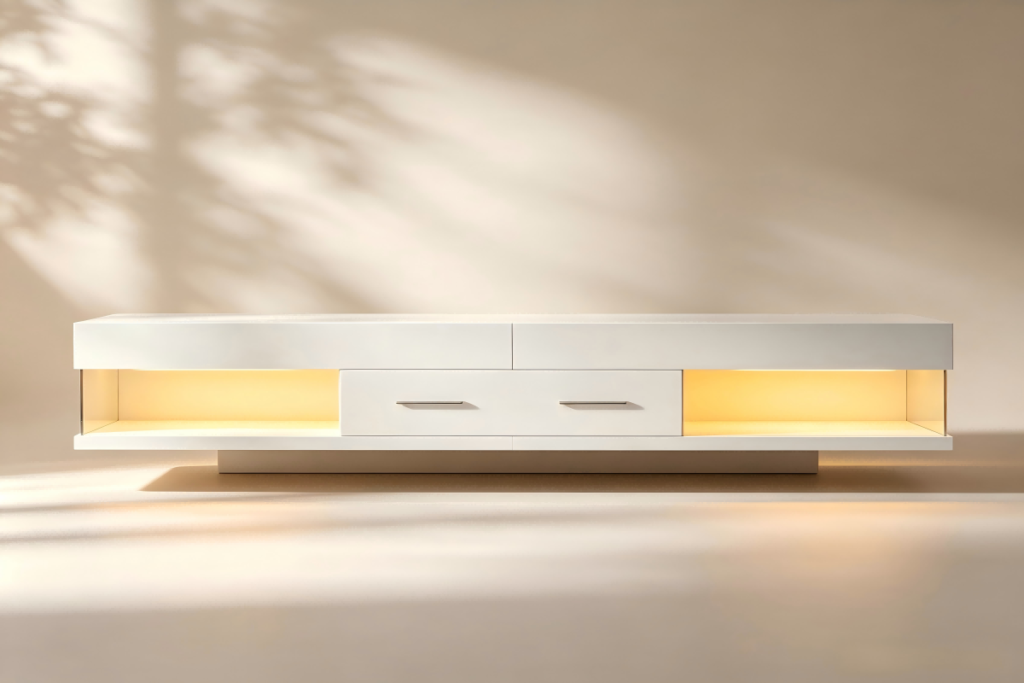
Modern TV stands increasingly combine engineered wood with powder-coated steel frames.
Metal components provide several advantages:
- Improved structural strength
- Contemporary industrial appearance
- Better load capacity
- Longer product life
- Stable construction
The combination of melamine panels and steel frames has become especially popular for industrial, minimalist, and urban furniture collections.
Matching Materials to Different Markets
Furniture preferences vary significantly around the world.
North America
Consumers often prefer:
- Farmhouse TV stands
- Rustic wood grain finishes
- Fireplace TV stands
- Large storage cabinets
- Durable melamine construction
Europe
European buyers generally favor:
- Minimalist designs
- Light oak finishes
- Floating TV units
- Clean lines
- Compact dimensions
Australia
Australian furniture collections frequently focus on:
- Contemporary simplicity
- Natural oak appearance
- Functional storage
- Moisture-resistant materials
Middle East
Luxury finishes are highly valued, including:
- Marble-look surfaces
- Dark wood tones
- Gold metal accents
- Premium veneer collections
Understanding regional preferences helps furniture businesses develop products that better match local consumer demand.
Durability Is More Than Just the Material
While selecting quality materials is essential, overall durability depends on the entire manufacturing process.
Important factors include:
- Precision panel cutting
- High-quality edge banding
- Accurate drilling
- Reliable hardware installation
- Stable structural engineering
- Comprehensive quality inspection
A well-designed TV stand made from melamine can often outperform a poorly manufactured product made from more expensive materials.
Sustainability Is Becoming More Important
Global buyers increasingly expect environmentally responsible furniture.
Many furniture manufacturers now use responsibly sourced wood-based panels that comply with international environmental standards.
Choosing certified materials helps brands:
- Meet import regulations
- Improve brand reputation
- Support sustainable manufacturing
- Reduce environmental impact
Sustainability is no longer just a trend—it has become an important purchasing consideration for retailers and consumers alike.
Choosing the Right Manufacturing Partner
Selecting the right material is only part of building a successful furniture collection.
An experienced manufacturing partner can also provide valuable guidance on:
- Material recommendations
- Cost optimization
- Product engineering
- Packaging solutions
- Production consistency
- Quality control
- Customization options
Working with a knowledgeable OEM & ODM furniture manufacturer helps ensure that every TV stand meets market expectations while remaining competitive.
Conclusion
There is no single “best” material for every TV stand. The ideal choice depends on your target market, product positioning, customer expectations, and budget.
Melamine offers excellent value for mass-market collections, MDF provides smooth painted finishes, plywood delivers premium durability, veneer creates luxury aesthetics, and metal components enhance structural performance.
Understanding how these materials perform allows furniture brands, wholesalers, retailers, and importers to make informed sourcing decisions and develop products that meet the needs of different global markets.
At TERRAMOX Furniture, we believe that successful furniture begins with thoughtful material selection, practical design, and reliable manufacturing. We work closely with furniture brands, distributors, wholesalers, retailers, and project buyers to develop OEM and ODM TV stand collections that combine functionality, quality, and modern design for international markets.
Whether you’re developing a contemporary entertainment center, a farmhouse TV stand, or a custom living room furniture collection, choosing the right materials is the first step toward creating products that deliver long-term value.
Frequently Asked Questions
What is the best material for a modern TV stand?
Melamine board is one of the most popular choices because it offers durability, attractive finishes, easy maintenance, and cost-effective production.
Is plywood better than MDF?
Plywood generally provides greater strength and moisture resistance, while MDF offers a smoother surface for painted furniture. The best choice depends on the product design and target market.
Which TV stand material is best for wholesale furniture?
Melamine board is widely used in wholesale furniture because it balances quality, appearance, production efficiency, and competitive pricing.
Can TV stands be customized for different markets?
Yes. TV stands can be customized in terms of dimensions, colors, finishes, storage layouts, hardware, packaging, and branding to meet the needs of different markets and customer groups.
Ready to Develop Your Next TV Stand Collection?
If you’re looking for an experienced OEM & ODM furniture manufacturer for custom TV stands and living room furniture, TERRAMOX Furniture provides flexible manufacturing solutions designed for global furniture brands, wholesalers, retailers, distributors, and importers.
Contact our team to discuss your next furniture project and discover how customized manufacturing can help your business grow.